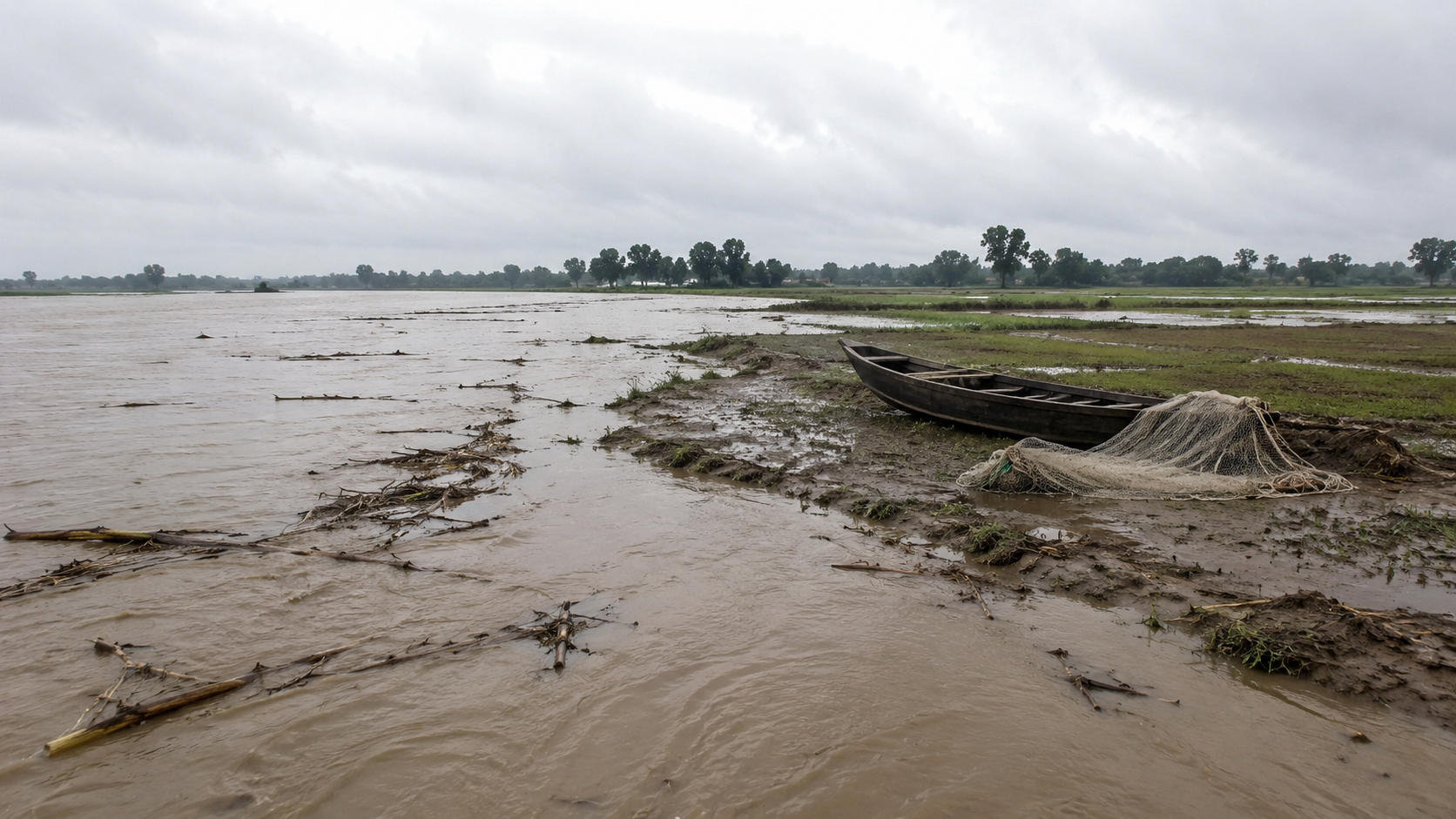
Unfamiliar fish are surfacing in Bihar’s flooded districts, and the state says some people have fallen ill after eating them.
Patna: The Bihar government has asked people not to catch, sell or eat fish turning up in floodwaters flowing in from Nepal, warning that the catch may be contaminated [VERIFY: date the advisory was issued]. The warning follows flash floods in Nepal that have pushed water from the Trishuli river into the state through the Gandak and Kosi.
What the fisheries department has asked people to do
The Animal and Fisheries Resources Department has told people not to buy, sell or eat fish pulled out of floodwater. Its stated reason is contamination.
According to the advisory, fish moving through flooded areas may carry sewage waste, bacteria, viruses and other pathogens. People have been asked to hold off until environmental conditions stabilise.
Nepal police have issued a similar warning for residents on their side of the border.
The appeal, as set out in the advisory issued by the Department of Dairy, Fisheries and Animal Resources, asks people to:
- Avoid unknown or unusual-looking fish.
- Not buy, sell or eat fish caught from floodwaters.
- Not assume an unfamiliar fish is safe without checking with the department concerned.
- Reach the nearest health centre immediately if vomiting, diarrhoea, abdominal pain, dizziness or breathing difficulty follows a meal of such fish.
- Report sightings of unusual fish to the District Fisheries Officer or the local administration.
- Ignore rumours and stay away from unknown fish as a precaution.
Why unfamiliar fish are showing up in flooded areas
Floods do not keep fish where they belong. The advisory explains that when water rises, fish leave ponds, rivers, lakes and reservoirs and spread widely with the floodwater.
That movement is why residents in flood-hit areas are seeing varieties they do not recognise. It is also why the department says continuous exposure to polluted drains, dead animals and other contaminants makes such fish unsafe to eat.
What the Kosi and Gandak are carrying besides fish
Both rivers are fed by water originating in Nepal. Both have swelled after the flash floods.
Landslides and glacial bursts in Nepal’s hilly regions have washed down silt, mud, stones and large tree trunks. A glacial burst happens when a lake formed by melting glacier ice breaks through the natural barrier holding it back, releasing a large volume of water downstream in a short time.
Wreckage from collapsed bridges and damaged hydroelectric projects in Nepal has been seen floating into Bihar’s rivers. So have vehicles, household items and LPG cylinders swept out of flooded villages.
Human and animal remains washed down from Nepal are adding to the risk of infection in the water.
The diseases health experts are worried about
The larger worry is drinking water. Health experts warn that when contaminated floodwater mixes with sources such as hand pumps and wells, diarrhoea and cholera can spread quickly.
Contaminated water and food also raise the risk of typhoid. Hepatitis A and E can infect the liver through contaminated water.
Standing water brings a second set of problems. Waterlogging is expected to encourage mosquito breeding, which raises the risk of dengue, malaria and chikungunya, along with skin and eye infections.
Arsenic and iron in border district groundwater
Groundwater in several districts along the Nepal border already carries arsenic above the safe limit of 10 ppb, or parts per billion. Ppb is a way of measuring how much of a substance sits in water, so 10 ppb means 10 units of arsenic for every billion units of water.
The districts named are West Champaran, East Champaran, Sitamarhi, Kishanganj, Purnia and Araria. Arsenic levels are highest in districts along the banks of the Ganga, though notable concentrations have also been found in floodplains formed by rivers that originate in Nepal.
Iron is the other problem. High iron content has been recorded in water across nearly all seven districts bordering Nepal, giving it an astringent taste and leaving red-yellow stains on utensils and clothing.
Kishanganj has recorded iron several times higher than normal. Officials say iron brought in by the floodwaters threatens to make local water sources even more contaminated.
The pressure on farms and food supply
The floodwaters are also expected to affect farmland across Bihar’s border districts. That has raised concerns about a possible shortage of grains and vegetables in the state.
For farmers already dealing with damaged fields, the loss arrives mid-season. [VERIFY: area of cropland affected, crops involved, any relief or compensation announced]
What a government doctor has said
Dr PV Singh of LNJP Hospital, which functions under the Bihar government, told NDTV that residents of affected areas need to be moved to safe locations in time. Dr Singh described the diseases linked to the contaminated water as a serious threat to people’s lives.
His remarks appear in the source material as reported speech rather than a verbatim quotation, so they are paraphrased here.
What happens next
Authorities have asked residents of flood-hit districts to stay alert, keep away from floodwater where possible, and follow official guidance. The advice holds until river levels stabilise and the affected water bodies return to normal.
No timeline has been given for when that is expected.
Key Takeaways
- Bihar’s fisheries department has asked people to stop buying, selling or eating fish taken from floodwater until conditions normalise.
- Water from Nepal’s Trishuli river is entering the state through the Gandak and Kosi, carrying debris, wreckage and animal remains.
- Contaminated water raises the risk of diarrhoea, cholera, typhoid and hepatitis A and E, while waterlogging adds dengue, malaria and chikungunya.
- Six named border districts already record arsenic above the 10 ppb safe limit, with iron levels high across the border belt.
- Damage to farmland in border districts has raised concerns about grain and vegetable supply.
FAQ
Is it safe to eat fish caught in Bihar’s floodwaters right now?
The Bihar government’s advisory says no. The Animal and Fisheries Resources Department has asked people not to buy, sell or consume fish taken from floodwater, on the grounds that it may carry sewage contamination, bacteria, viruses and other pathogens. The advice holds until conditions return to normal.
Which Bihar districts are affected by the water flowing in from Nepal?
Official material available so far does not rank districts by damage. It names West Champaran, East Champaran, Sitamarhi, Kishanganj, Purnia and Araria among the border districts where groundwater arsenic already crosses 10 ppb, and describes the Gandak and Kosi carrying Nepal’s floodwater into northern Bihar.
What symptoms has the department told people to watch for?
The department has listed vomiting, diarrhoea, abdominal pain, dizziness and breathing difficulty as signs that should send a person to the nearest health centre immediately after eating such fish. It has not specified how long after a meal these symptoms typically appear.
Why is arsenic in groundwater a concern in the border districts?
Arsenic above 10 ppb is already recorded in several districts along the Nepal border, and the highest readings sit along the Ganga. Floodwater mixing into hand pumps and wells raises the chance that contaminated water reaches households that depend on those sources daily.
Sources
- Advisory of the Animal and Fisheries Resources Department, Government of Bihar
- Advisory issued by the Department of Dairy, Fisheries and Animal Resources, Bihar
- Warning issued to residents by Nepal Police
- Dr PV Singh, LNJP Hospital, Bihar government, speaking to NDTV
- NDTV reporting, including its aerial coverage of the flooding in Nepal